

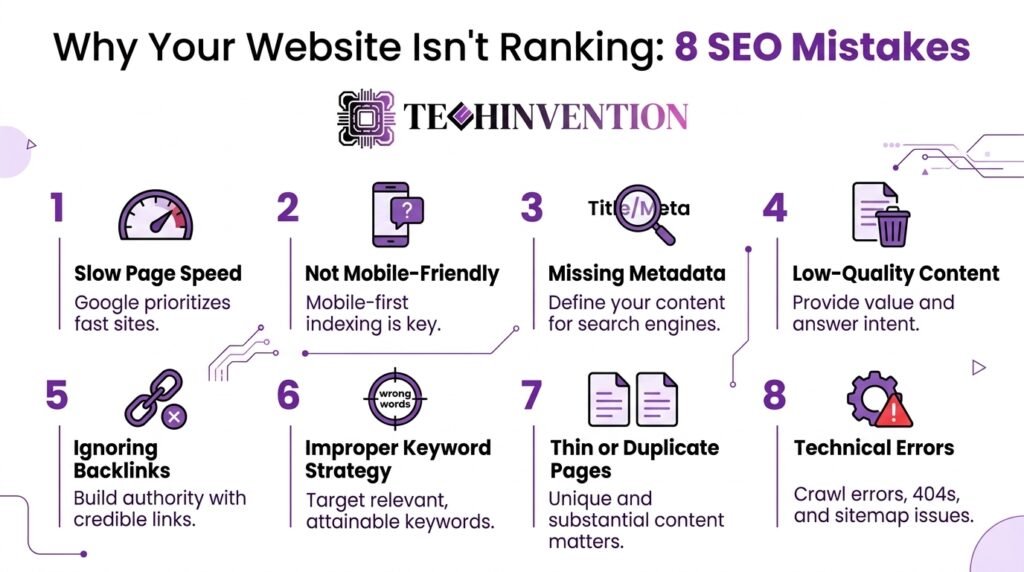
Most businesses fail at SEO not because search engine optimization doesn’t work, but because their strategy ignores the fundamentals—relevance, helpful content, technical accessibility, trustworthiness, and competitiveness. This post breaks down the 8 most common SEO mistakes and how to fix them.
I’ve audited hundreds of websites. And almost every time a business owner tells me “SEO doesn’t work,” the real problem isn’t SEO.
It’s their approach to it.
Here’s the hard truth: weak SEO doesn’t just mean you’re invisible on Google. It means your competitors are capturing the leads, the clicks, and the customers that should be yours.
Poor SEO strategy compounds over time. Every month you’re not ranking, you’re handing market share to someone else. And the frustrating part? Most of these problems are fixable—once you know what to look for.
In this post, I’m going to walk you through the 8 most common reasons websites fail to rank, why they matter, and exactly what you can do about each one. By the end, you’ll have a clear picture of what a real SEO framework looks like—and where your strategy might be falling short.
Let’s get into it.
Mistake 1: Targeting the Wrong Keywords
Are You Optimizing for Keywords Nobody Is Actually Searching?
This is the #1 mistake I see. Businesses pour time and money into content, then wonder why organic search traffic never shows up.
The problem? They’re targeting keywords that are either too competitive, too vague, or completely disconnected from what their audience types into Google.
Keyword difficulty matters enormously here. A brand-new website trying to rank for “digital marketing” is competing against HubSpot, Neil Patel, and Forbes. That’s not a strategy—that’s wishful thinking.
What actually works is going after long-tail keywords—specific, lower-competition phrases that signal clear intent. Instead of “marketing software,” try “best email marketing software for small e-commerce businesses.” Less traffic, yes. But far higher conversion potential.
Here’s what to do:
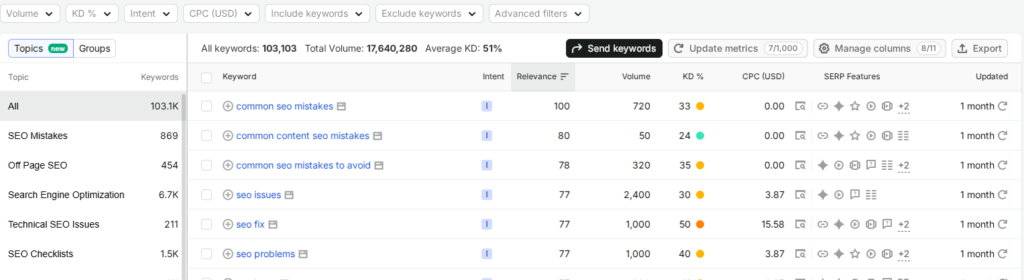
- Prioritize keywords with a clear match between user intent and your offering
- Build topical clusters—a hub page supported by related subtopic content—to signal domain authority on a subject
Mistake 2: Content That Doesn’t Satisfy Search Intent
What Is Search Intent, and Why Does It Tank Your Rankings?
You can target the right keyword and still fail. How? By ignoring search intent.
Search intent is the reason behind a query. Google’s entire job is to match the searcher with the most relevant result. If your content format, angle, or depth doesn’t match what the searcher actually wants, Google will rank someone else above you.
There are four main types of intent: informational, navigational, commercial, and transactional. A page built for one type won’t rank well for another.
For example: if someone searches “how to fix crawl errors,” they want a step-by-step tutorial—not a sales page for your SEO tool. Flip that, and a search like “hire SEO agency” calls for a service page with social proof, not a blog post.
How to fix this:
- Before writing a single word, Google your target keyword and analyze the top 5 results
- Note the content format (listicle, guide, video, tool), content angle (“for beginners,” “in 2026”), and depth
- Mirror what’s already working—then do it better
Mistake 3: Thin or Unhelpful Content
How Thin Content Hurts Your Google Rankings
Content quality has never mattered more. Google’s helpful content system explicitly targets content that exists primarily to rank, rather than to genuinely help people.
Thin content—short, surface-level pages that say nothing new—drags down your entire domain. Even one poorly-performing section of your site can affect how Google evaluates the rest of it.
People-first content is Google’s stated goal. That means content should demonstrate first-hand expertise, answer questions thoroughly, and leave the reader better off than before they clicked.
Practical steps to improve content quality:
- Audit your existing content with a tool like Screaming Frog or Ahrefs Site Audit
- Identify pages with low word counts, no backlinks, and poor engagement metrics
- Either consolidate weak pages through redirects, or expand and improve them with deeper, more actionable information
- Add original insights, data, examples, or expert perspectives that can’t be found anywhere else
Mistake 4: Technical SEO Problems
What Are Crawlability and Indexability—and Why Do They Matter?
You could have the best content on the internet. If Google can’t find it, crawl it, or index it, none of that matters.
Technical SEO covers everything that affects how search engines access and understand your site. That includes crawlability (can Google’s bots reach your pages?), indexability (are those pages being added to Google’s index?), and site structure (does your site architecture make logical sense?).
Common technical problems I see regularly:
- Pages accidentally blocked by
robots.txt - Missing or misconfigured XML sitemaps
- Broken internal linking that leaves important pages orphaned
- Duplicate content caused by URL parameters
- Canonicalization errors confusing Google about which version of a page to rank
Run a technical SEO audit using Google Search Console and a crawler like Screaming Frog at least once a quarter. These tools will surface crawl errors, index coverage issues, and structural problems before they become ranking disasters.
Mistake 5: Poor Website Experience
How Core Web Vitals and Mobile SEO Affect Your Rankings
Core Web Vitals are Google’s user experience metrics. They measure loading performance (LCP), interactivity (INP), and visual stability (CLS). Poor scores don’t just frustrate users—they directly influence your SEO ranking.
Page speed is critical. According to Google research, as page load time increases from 1 to 3 seconds, the probability of a bounce increases by 32%. Every second of delay is costing you clicks and conversions.
Mobile SEO is equally non-negotiable. Google uses mobile-first indexing, which means it evaluates the mobile version of your site first when determining rankings. If your site is clunky on a phone, it’s penalized everywhere.
Quick wins:
- Use Google PageSpeed Insights to identify your slowest pages
- Compress images with tools like TinyPNG or WebP format
- Enable lazy loading and browser caching
- Switch to a faster hosting provider if needed
Mistake 6: Weak Authority and Backlinks
Why Backlinks Still Matter for SEO in 2025
Backlinks remain one of Google’s most important ranking signals—not because Google says so explicitly, but because the correlation between high-quality links and top rankings is consistently documented. According to Ahrefs (2023), 96.55% of pages get zero organic search traffic, and one major reason is a lack of backlinks.
Domain authority is built through earning links from trusted, relevant websites. One high-quality link from an industry publication will do more for your SEO ranking than 50 links from random directories.
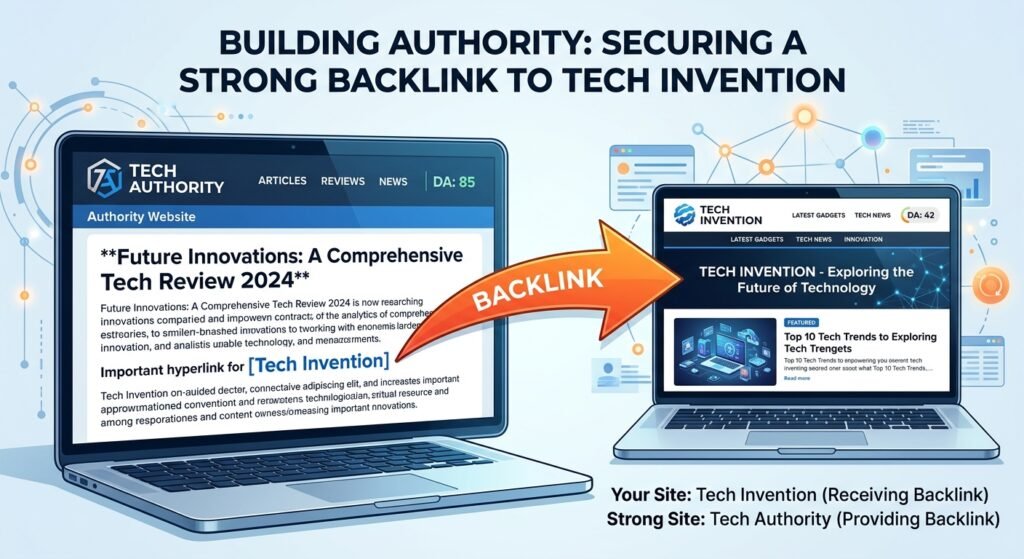
Proven link-building strategies:
- Digital PR — create data-driven studies or original research that journalists want to cite
- Guest posting — contribute expert articles to reputable industry blogs with a contextual link back to your site
- Link reclamation — use Ahrefs to find unlinked brand mentions and request attribution
- Broken link building — find broken links on relevant sites and pitch your content as a replacement
Mistake 7: Poor Titles and SERP Optimization
How Meta Title Optimization Impacts Your Click-Through Rate
Your SERP visibility depends on more than just rankings. Even a #3 result can outperform the #1 spot with a better title.
Meta title optimization directly impacts your click-through rate (CTR). A compelling title promises something specific—an answer, a number, a benefit—and delivers on it immediately.
Most businesses write titles like “Our SEO Services | Company Name.” That tells the searcher nothing. Compare it to: “7 SEO Mistakes Killing Your Rankings (And How to Fix Them).” One of these gets clicked. The other doesn’t.
Meta description still influences CTR even though it’s not a direct ranking factor. Write it like ad copy—clear, specific, and with a reason to click.
Optimization checklist:
- Include your primary keyword in the title, ideally near the front
- Keep meta titles under 60 characters to avoid truncation
- Use power words: “proven,” “step-by-step,” “mistakes,” “guide,” “checklist”
- Test different title formats using Google Search Console’s performance data
Mistake 8: No Consistent SEO Monitoring
Why SEO Audits and Ongoing Measurement Are Non-Negotiable
SEO isn’t a one-time project. It’s an ongoing process. Google Search Console gives you a direct window into how Google sees your site—yet most businesses barely log in.
Skipping regular SEO audits means algorithm updates, technical issues, and ranking drops go unnoticed for months. By the time you catch them, the damage is done.
Set up a monthly monitoring routine:
- Check Google Search Console for index coverage errors, Core Web Vitals issues, and manual actions
- Track your organic search traffic trends in Google Analytics 4
- Monitor your keyword rankings with Ahrefs or SEMrush
- Audit top-performing pages quarterly and update any outdated content
The SEO Framework That Actually Works
A Step-by-Step System for Sustainable Google Rankings
After walking through 8 common mistakes, here’s how the pieces fit together into a repeatable framework. Think of this as your roadmap—not a one-time checklist, but a continuous cycle.
Step 1: Keyword Research
Start with intent-matched, achievable long-tail keywords. Use Ahrefs or SEMrush to assess volume and keyword difficulty. Build a topical cluster strategy, not a one-off keyword list.
Step 2: Search Intent Alignment
Before creating any content, analyze the top-ranking results for your target keyword. Match the dominant format, angle, and depth. Google is already showing you what it wants to rank.
Step 3: Content Creation
Write helpful content that demonstrates genuine expertise. Cover the topic thoroughly, use original examples, and format for readability—short paragraphs, clear subheadings, bullet points where appropriate.
Step 4: Technical SEO
Make sure Google can find and index every important page. Fix crawl errors, optimize internal linking, submit an updated XML sitemap, and eliminate duplicate content.
Step 5: Authority Building
Earn backlinks from relevant, trusted sources through digital PR, guest content, and strategic outreach. Quality always beats quantity here.
Step 6: SERP Optimization
Write compelling meta titles and descriptions that earn the click, not just the ranking. Monitor CTR data in Google Search Console and iterate.
Step 7: Measurement
Track what matters: organic search traffic, keyword positions, CTR, bounce rate, and conversions. If you’re not measuring it, you can’t improve it.
Step 8: Continuous Improvement
SEO is never finished. Refresh content regularly, monitor algorithm updates, and iterate based on what the data tells you.
Fix Your SEO Now or Keep Losing to Competitors.
Here’s the bottom line: businesses don’t fail with SEO because the channel doesn’t work. They fail because their strategy doesn’t address what Google actually cares about—relevance, helpful content, technical accessibility, trustworthiness, and competitiveness.
Each of the 8 mistakes above is fixable. But they don’t fix themselves.
Start with a proper SEO audit. Identify your biggest gaps. Then work through this framework methodically. You don’t have to fix everything at once—but you do have to start.
The businesses outranking you right now? They’re not smarter. They just made the right moves before you did. That’s still changeable.
Frequently Asked Questions
Do I need to hire an SEO expert to fix my SEO?
Not always. Basic SEO improvements, such as optimizing titles, improving content, fixing broken links, and adding internal links, can often be handled in-house. However, if your website has technical SEO issues, poor rankings, strong competition, indexing problems, or a significant drop in organic traffic, an experienced SEO expert can identify the underlying problems and create a data-driven strategy to improve your search visibility.
1. Why isn’t my website ranking on Google?
Your website may not be ranking because of poor keyword targeting, weak content, technical SEO issues, slow page speed, poor backlinks, weak internal linking, or insufficient search intent optimization.
2. What are the most common SEO mistakes that prevent websites from ranking?
Common mistakes include targeting the wrong keywords, creating thin or duplicate content, ignoring technical SEO, having slow loading speeds, neglecting mobile optimization, using poor-quality backlinks, weak internal links, and failing to optimize for search intent.
3. Can poor keyword research stop my website from ranking?
Yes. Targeting highly competitive keywords without considering search intent, relevance, search volume, and keyword difficulty can make it difficult for your website to gain visibility.
4. Does thin content affect Google rankings?
Yes. Content that provides little original value or does not adequately answer the user’s query may struggle to rank. Focus on useful, comprehensive, accurate, and people-first content.
5. How does website speed affect SEO rankings?
Website speed affects user experience and can contribute to search performance. Slow pages can increase abandonment and make it harder for visitors to interact with your site effectively.
6. Why is mobile optimization important for SEO?
Most searches happen on mobile devices, so your website should provide a fast, responsive, and easy-to-use mobile experience. Poor mobile usability can negatively affect both users and organic search performance.
7. Can technical SEO problems prevent my website from appearing on Google?
Yes. Issues such as incorrect robots.txt rules, noindex tags, broken links, crawl errors, duplicate URLs, poor site architecture, and indexing problems can prevent important pages from being properly discovered or indexed.
8. How does search intent affect website rankings?
Google aims to show pages that best satisfy what users are looking for. If your content does not match the intent behind a search query, it may struggle to rank even when your keywords are optimized.
9. Are backlinks still important for SEO?
Yes. Relevant, authoritative, and naturally earned backlinks can strengthen a website’s authority. However, link quality and relevance are more important than simply building a large number of links.
10. Can poor internal linking hurt my SEO?
Yes. A weak internal linking structure can make it harder for search engines to discover important pages and understand the relationship between your content. Strategic internal links can improve navigation and distribute authority across your site.
11. Why is my website indexed but still not ranking?
Indexing only means Google has discovered and stored a page. Ranking depends on many factors, including content quality, relevance, search intent, competition, authority, technical performance, and user experience.
12. How long does it take for SEO changes to improve rankings?
SEO results vary depending on your website’s authority, competition, technical condition, content quality, and the changes implemented. Some improvements may appear relatively quickly, while meaningful organic growth can take several months.
13. Can duplicate content cause ranking problems?
Duplicate or substantially similar content can make it harder for search engines to determine which page should appear in search results. Using unique, valuable content and appropriate canonicalization can help.
14. How can I find out why my website is not ranking?
Start with a complete SEO audit covering indexing, technical SEO, keywords, search intent, content quality, backlinks, internal linking, mobile usability, page speed, and on-page optimization. Google Search Console can also help identify indexing and search-performance issues.
15. How can Tech Invention help improve my website’s Google rankings?
Tech Invention can help identify SEO weaknesses and develop a customized strategy covering technical SEO, keyword research, on-page optimization, content, local SEO, link-building strategies, AEO, and GEO. The goal is to improve your website’s visibility, qualified traffic, and organic growth.