

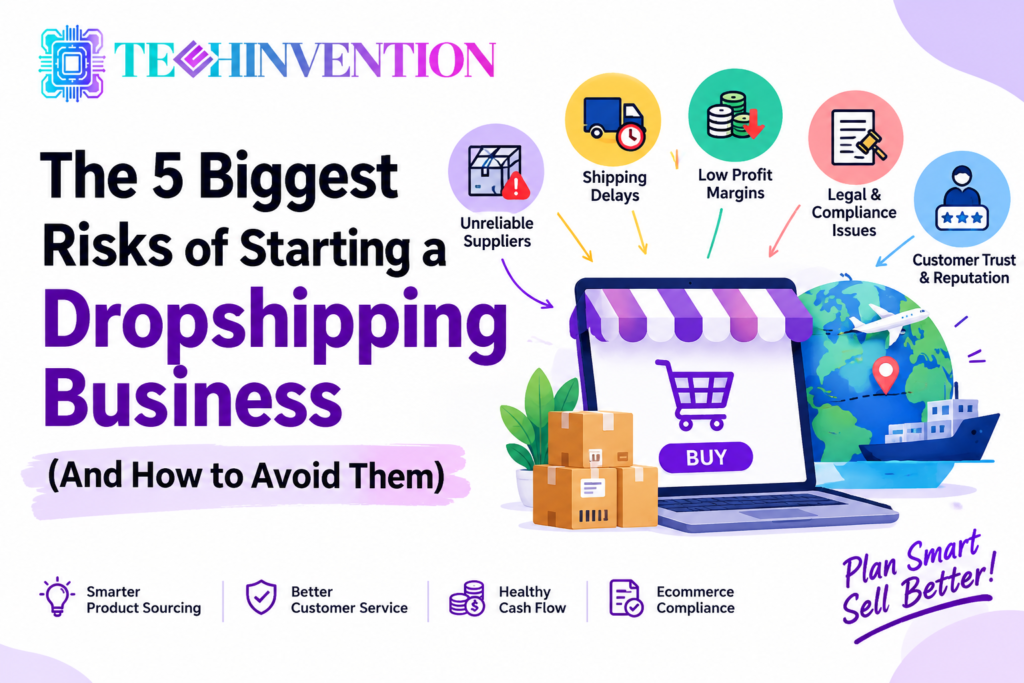
Starting a dropshipping business can be exciting because the startup cost is usually lower than traditional retail. You don’t need a warehouse, large inventory, or expensive equipment to launch an online store. However, low startup costs don’t mean low business risks.
Many beginners think that because a supplier handles order fulfillment, they don’t have to worry about much else. But that’s not true. You’re still responsible for your customers, marketing, product descriptions, refunds, and overall brand reputation. If a supplier sends poor-quality products or delays an order, your customer will usually come to your business for answers.
That’s why building a successful ecommerce business requires more than finding a trending product and running ads. You need reliable product sourcing, realistic shipping times, healthy profit margins, good customer service, and proper ecommerce compliance.
You need the systemIn this guide, we’ll explore the 5 biggest dropshipping challenges and explain simple, practical ways to avoid them. Whether you’re just starting out or already running an online store, understanding these risks can help you make smarter decisions and build a more reliable and profitable dropshipping business.
Why a Dropshipping Business Is Easy to Start but Hard to Run Well
A dropshipping business is attractive because you can sell products without stocking them yourself. Instead, a third-party supplier stores and ships the products after a customer places an order. That sounds efficient. And in some ways, it is.
However, the simplicity is deceptive.
You are still responsible for what your store promises. If your website says a product ships fast, customers expect fast shipping. If your page describes premium product quality, customers expect exactly that. If something arrives damaged, delayed, or completely different from the description, the customer usually doesn’t chase the supplier. They contact you.
That’s why successful dropshipping is less about shortcuts and more about operational control. If you understand the risks before you launch, you’ll make better choices, waste less money, and protect your long-term brand.
1: Unreliable Suppliers Can Break Your Business Fast
The supplier is the engine behind your store. If that engine is weak, everything else becomes unstable.
Many new sellers choose a supplier based only on price. That’s understandable, especially when you want better profit margins. But the cheapest supplier can easily become the most expensive mistake. Poor packaging, inconsistent stock, weak communication, inaccurate listings, and low product quality can lead to refunds, complaints, and negative reviews.
Worse, you often discover these problems after you’ve already started spending on paid advertising.
So here’s the smarter move: test before you trust.
Order samples. Review the packaging. Check the real dimensions. Compare the item with the photos. See how long fulfillment actually takes. And if the supplier gives vague answers before you start selling, expect bigger problems after you start getting orders.
How You Can Reduce Supplier Risk
Follow this simple process before adding any product to your store:
- Order at least one sample yourself
- Verify the actual shipping speed
- Review product consistency and packaging
- Ask about stock levels and restocking times
- Confirm how returns and damaged items are handled
- Identify a backup supplier for your best products
This step alone can save your brand reputation.
Also, if you sell physical consumer products, pay attention to product safety. The U.S. Consumer Product Safety Commission online seller guidance is especially relevant for online sellers and dropshippers. If a product is unsafe or recalled, “my supplier sent it” won’t protect your business.
2: Shipping Delays Create Refunds, Complaints, and Lost Trust
Shipping delays are one of the most common dropshipping mistakes. And they hurt more than people think.
When a customer buys from your store, they aren’t buying “maybe.” They’re buying an expectation. If your site suggests quick delivery but the item takes three weeks to arrive, the customer feels misled. That frustration quickly turns into support tickets, chargebacks, refund requests, and bad word of mouth.
Here’s the trap: many beginners confuse tracking with speed.
A supplier may generate a tracking number quickly, but that doesn’t mean the package is moving. There can still be processing delays, warehouse bottlenecks, customs issues, and local carrier slowdowns. So if you advertise “fast shipping” without solid evidence, you’re taking a trust risk before the sale is even complete.
How You Can Avoid Shipping Problems
You need to set realistic expectations.
Your product pages should clearly explain:
- Processing time
- Estimated delivery window
- Shipping locations
- Tracking availability
- Possible customs delays
- Return procedures
If you sell to U.S. customers, review the FTC’s Mail, Internet, or Telephone Order Rule. It outlines expectations around shipment timing and what happens when delays occur.
The lesson is simple: never promise faster shipping than your system can reliably deliver.
And if delays happen anyway, communicate early. A short message explaining the status of an order is often enough to preserve customer satisfaction. Silence, on the other hand, destroys trust. Customers definitely trust you if you are one every step.
Thin Profit Margins Can Make Sales Look Better Than They Are
This is where many beginners get blindsided.
A product might sell for $40. That sounds promising. But once you subtract supplier cost, shipping, payment fees, refunds, apps, and customer acquisition cost, the profit can shrink to almost nothing.
That’s why revenue is not the same as profit.
A lot of new store owners celebrate sales volume without calculating the real economics. Then they scale ads, increase spend, and realize too late that each order is barely profitable—or worse, actively losing money.
This is especially dangerous in ecommerce marketing, where ad costs can rise quickly. If your advertising costs are too high relative to your margin, growth makes the problem bigger, not smaller.
A Better Way to Think About Profit
Before you run traffic, calculate:
- Product cost
- Shipping cost
- Payment processing fees
- App or platform costs
- Refund allowance
- Expected ad cost per sale
- Taxes
- Chargeback risk
Then find your break-even point.
If your numbers are too tight, don’t force the product. Improve the offer, increase the average order value, create bundles, or choose a different item. A weak margin usually stays weak unless something structural changes.
You should also protect your cash flow. Refunds, delayed payouts, supplier bills, and surprise shipping issues can create pressure fast. Keep a reserve. In small ecommerce operations, a cash cushion is often the difference between surviving a rough month and shutting the store down.
Legal and Compliance Problems Are More Serious Than Most Beginners Expect
A lot of sellers assume the supplier handles the legal side. That assumption is dangerous.
When you publish a product page, run an ad, or process a transaction, you are making claims to the customer. That means you need to think about consumer protection, advertising compliance, product liability, and taxes.
If you say a product “ships tomorrow,” you need a reasonable basis for that claim. If you say it improves health, performance, or safety, the claim needs to be truthful and supportable. If you show a discount, it shouldn’t be misleading.
The FTC advertising and marketing guidance is a smart place to start if you want to understand how online claims are evaluated.
Compliance Areas You Should Check Before Selling
Before you launch, review these areas:
- Online selling laws in your country or state
- Sales tax or VAT obligations
- Refund and cancellation rules
- Product restrictions by category
- Import rules for your market
- Safety labeling or certification requirements
- Marketplace rules if you sell on third-party platforms
This matters even more if you sell children’s goods, electronics, cosmetics, supplements, or anything with elevated safety concerns. You should also search for recalls using the CPSC recall database.
In short, don’t copy supplier claims blindly. Write accurate product descriptions. Avoid exaggeration. And if a category seems legally complicated, slow down before you scale.
Customer Trust, Chargebacks, and Reputation Problems Can Kill Growth
You can recover from a weak ad campaign.
You can recover from a product that doesn’t convert.
But once customer trust starts collapsing, rebuilding becomes much harder.
A dropshipping store needs to feel safe, transparent, and credible. If your site looks vague, hides policies, uses suspicious reviews, or makes overhyped claims, people hesitate to buy. And if they do buy and feel disappointed, you open the door to payment disputes, chargebacks, and damaging reviews.
Trust isn’t built with slogans. It’s built with clarity.
What a Trustworthy Store Needs
Make sure your site clearly shows:
- Business contact information
- Shipping policy
- Return and refund policy
- Privacy policy
- Terms and conditions
- Accurate product details
- Secure checkout experience
- Support channels customers can actually use
Also, avoid fake reviews. They may look like a shortcut, but they weaken credibility. Real reviews, clear policies, and responsive support build trust much more effectively.
Chargebacks often happen because customers feel confused, ignored, or misled. So make your billing descriptor recognizable, send shipping updates, respond quickly to problems, and document every order carefully. The FTC consumer guidance on shopping and dispute records reinforces how important good records and transparent communication can be.
Let’s move on to How You Can Start More Safely
If you want to lower risk from day one, follow this sequence.
Step 1: Choose Safer Products
Start with products that have reasonable demand, manageable shipping, and fewer safety complications. Avoid items with a high risk of breakage, confusing sizing, or aggressive claims unless you fully understand the category.
Use product research to evaluate demand, competition, pricing, and return risk before building your store around a product.
Step 2: Vet Suppliers Thoroughly
Don’t rely on screenshots or marketplace ratings alone. Order samples, check response times, and ask detailed questions about fulfillment, stock, and returns.
Look for supplier reliability, not just low price.
Step 3: Build Honest Product Pages
Write clear, specific descriptions. Use realistic shipping windows. Remove hype that you cannot support. Honest pages convert better over time because they attract the right expectations.
Step 4: Run Small Tests First
Start with a controlled ad budget. Measure conversion rate, refund rate, delivery speed, and support volume before scaling.
Step 5: Create Support Systems Before Problems Happen
Prepare templates for order confirmation, shipping delays, damaged items, refunds, and replacement requests. Good customer service is not a bonus. It is a growth system.
Step 6: Watch the Numbers Weekly
Track:
- Gross margin
- Net margin
- refund rate
- delivery times
- chargebacks
- ad spend efficiency
- Repeat purchase rate
What gets measured gets improved.
Final Touch
A Dropshipping Business Works Best When You Treat It Like a Real Business
Yes, a dropshipping business can be a smart way to start in ecommerce.
But only if you respect the risks.
The biggest threats are usually not flashy. They are operational. A bad supplier. Unrealistic shipping claims. Weak margins. Legal blind spots. Poor trust signals. These are the issues that quietly destroy stores that looked promising at the beginning.
The good news is that you can avoid most of them.
If you test products, vet suppliers, set honest expectations, protect your margins, and take compliance seriously, you give yourself a much stronger foundation. That doesn’t guarantee instant success. But it does give you something better: a business model that can actually survive growth.
And that’s the real goal.
Frequently Asked Questions About Dropshipping Challenges
1. What are the biggest challenges in dropshipping?
The biggest dropshipping challenges include finding reliable suppliers, maintaining product quality, dealing with shipping delays, managing profit margins, handling customer complaints, and competing with other online stores.
2. Is dropshipping difficult for beginners?
Dropshipping isn’t necessarily difficult, but it does require planning and consistent effort. Beginners need to learn about product research, supplier management, marketing, customer service, pricing, and ecommerce operations.
3. How can I find a reliable dropshipping supplier?
Research suppliers carefully, check their reviews, compare prices and shipping times, and order product samples before selling. A reliable supplier should provide consistent product quality, accurate inventory information, and responsive customer support.
4. How can I avoid poor-quality products in dropshipping?
Always order samples before adding products to your store. Check the product’s quality, packaging, appearance, features, and delivery condition. Testing products yourself can help you avoid disappointing your customers.
5. How can I deal with dropshipping shipping delays?
Be honest about estimated delivery times and choose suppliers with reliable shipping options. Provide customers with tracking information and notify them quickly when unexpected delays occur.
6. How can I improve my dropshipping profit margins?
Compare multiple suppliers, negotiate better product prices, reduce unnecessary expenses, and choose products with healthy margins. You should also calculate advertising, shipping, payment processing, refund, and operating costs before setting your selling price.
7. Is competition a major dropshipping challenge?
Yes. Many sellers may offer similar products, making it difficult to compete only on price. Building a strong brand, improving your product pages, offering better customer service, and creating unique marketing content can help your store stand out.
8. How important is product research in dropshipping?
Product research is extremely important. A good product should have enough demand, reasonable competition, reliable supplier availability, and enough profit potential to cover your business expenses.
9. How can I handle customer complaints in dropshipping?
Respond quickly, stay professional, and focus on solving the problem instead of blaming the supplier. Offer appropriate solutions such as a replacement, refund, or additional assistance according to your store’s refund policy.
10. Can dropshipping businesses lose money?
Yes. Dropshipping businesses can lose money due to high advertising costs, low profit margins, refunds, chargebacks, shipping issues, poor product quality, and unsold inventory. Careful budgeting and testing can help reduce these risks.
11. How can I avoid common dropshipping mistakes?
Start small, test products before scaling, work with reliable suppliers, calculate your real profit margins, provide accurate product information, and create clear shipping and refund policies. Avoid spending heavily on advertising before you know that your business model works.
12. Is dropshipping still worth starting?
Dropshipping can still be worthwhile if you approach it as a real ecommerce business rather than a quick way to make money. Choosing the right products, building customer trust, controlling costs, and providing a good buying experience can improve your chances of long-term success.